

SEO
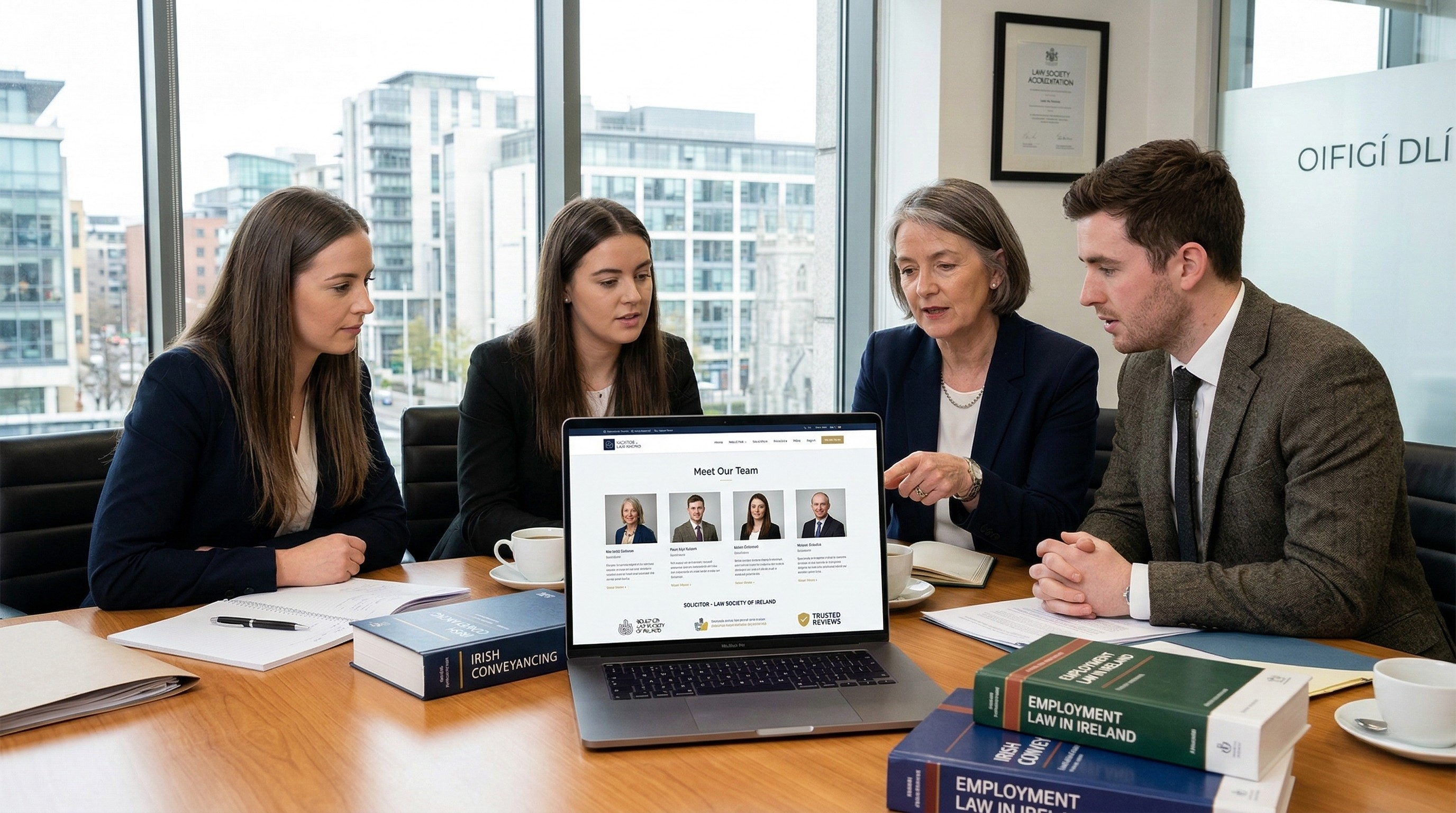

How Google evaluates legal websites differently — and what Irish solicitors need to do to demonstrate expertise, build trust, and rank higher.
Google doesn't treat all websites equally. Legal services fall into a category Google calls "Your Money or Your Life" (YMYL) — topics where poor information could cause real harm to people's health, finances, safety, or wellbeing.
Think about it from Google's perspective. If someone searches for "can my employer make me redundant while on sick leave" and lands on a page with incorrect information, they could make decisions that damage their livelihood. Google wants to avoid surfacing content that might lead people astray on important legal matters.
This is where E-E-A-T comes in. It's the framework Google uses to evaluate content quality, and for legal websites, the bar is set higher than for most other industries.
Understanding E-E-A-T isn't just about SEO. It's about building a website that genuinely serves potential clients — which, as it happens, is also what Google rewards.
E-E-A-T stands for Experience, Expertise, Authoritativeness, and Trustworthiness
Legal websites are classified as YMYL (Your Money or Your Life) and held to stricter quality standards
Google's human quality raters specifically evaluate legal content for E-E-A-T signals
Demonstrating real credentials and experience matters more for solicitors than for most businesses
Trust signals like Law Society membership, clear contact details, and reviews directly influence rankings
Content should be written or reviewed by qualified solicitors, not just marketing teams
E-E-A-T improvements benefit both SEO and conversion rates — they're the same thing
E-E-A-T is a framework from Google's Search Quality Rater Guidelines — a document used by human evaluators who assess search result quality. While these raters don't directly influence rankings, their assessments help Google refine its algorithms.
The first "E" was added in December 2022. It asks: does the content creator have first-hand experience with the topic?
For solicitors, this means:
Have you actually handled matters like the ones you're writing about?
Can you draw on real cases (appropriately anonymised) to illustrate points?
Does your content reflect practical knowledge, not just theoretical understanding?
A conveyancing guide written by a solicitor who has completed hundreds of transactions carries more weight than generic content written by someone who researched the topic online.
Does the content creator have the necessary knowledge or skill in the field?
For solicitors, this means:
Are you qualified to practise law in Ireland?
Do you have specific expertise in the practice areas you're writing about?
Can you demonstrate specialist knowledge through your content?
Expertise for legal content typically requires formal qualifications. A blog post about employment law should be written or reviewed by a solicitor who practises employment law — not by a marketing assistant who read some articles.
Is the content creator or website recognised as a go-to source in the field?
For solicitors, this means:
Is your firm known for particular practice areas?
Do other reputable sources link to or cite your content?
Are your solicitors quoted in media or legal publications?
Do you have professional body recognition or specialist accreditations?
Authoritativeness is built over time through reputation, citations, and recognition from others in the field.
Is the content accurate, honest, and safe? Is the website legitimate and transparent?
For solicitors, this means:
Is your contact information clear and accurate?
Do you display your Law Society membership and registration details?
Is your website secure (HTTPS)?
Do you have genuine client reviews?
Are your team members identifiable with real credentials?
Trustworthiness is the foundation. Google states that for YMYL topics, trustworthiness is the most important factor.
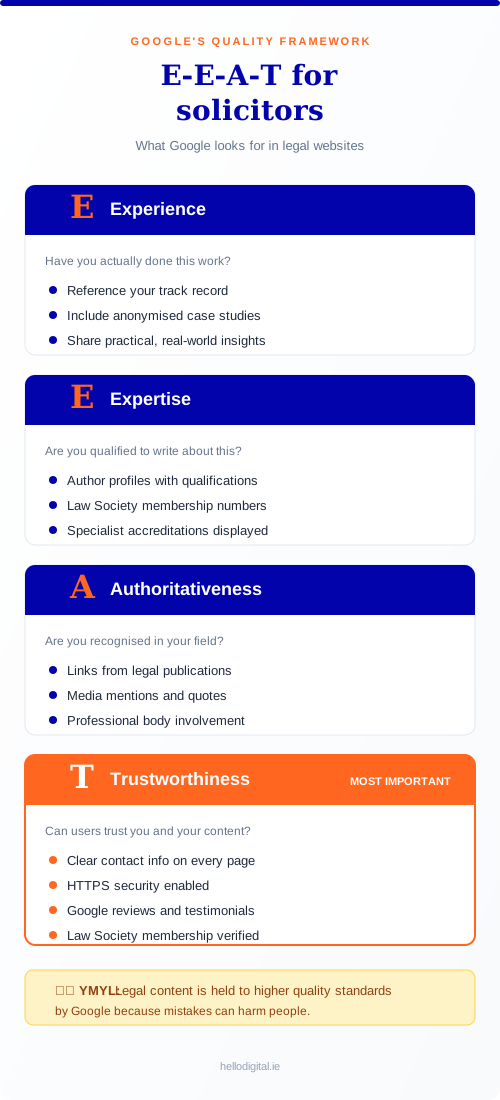
Legal services are explicitly listed as YMYL content in Google's guidelines. This has practical implications for how your website is evaluated.
Google's guidelines specifically mention:
Legal information and advice
Information about legal rights and processes
Content that could affect someone's legal standing or decisions
When your website covers these topics, Google applies stricter scrutiny. Content that might rank well in other industries won't necessarily rank for legal searches if it lacks clear E-E-A-T signals.
Content accuracy is non-negotiable. Errors or outdated information on legal topics can damage your rankings. If you have content about employment law from 2019 that doesn't reflect current legislation, it's a problem.
Author credentials matter. Anonymous legal content or content attributed to "Admin" sends the wrong signals. Google wants to see who wrote the content and why they're qualified.
Trust signals carry extra weight. For a restaurant website, missing contact details might be a minor issue. For a solicitor website, it raises questions about legitimacy.
Thin content performs particularly poorly. A 200-word page about "Family Law Services" with no substantive information won't compete against comprehensive, expert-written content.
Experience is about showing that you've actually done the work you're writing about.
Reference your track record
Include specifics about your practice:
"Having handled over 500 residential conveyancing transactions in Dublin..."
"In our 15 years advising on employment disputes..."
"Drawing on our experience representing clients at the Workplace Relations Commission..."
You don't need to reveal confidential details — general references to your experience establish credibility.
Use case studies
Anonymised case studies demonstrate real-world experience:
Describe the situation (without identifying details)
Explain your approach
Share the outcome
A case study about successfully defending an unfair dismissal claim shows experience in a way that generic content cannot.
Share practical insights
Content that reflects real experience often includes:
Common pitfalls you've seen clients encounter
Practical tips that aren't in textbooks
Realistic timeframes based on actual matters
Nuances that only come from handling real cases
Compare "Conveyancing typically takes 8-12 weeks" with "In our experience, straightforward transactions in Dublin complete within 8-10 weeks, though complex chains or title issues can extend this to 16 weeks or more."
Include solicitor perspectives
Quote your solicitors directly in content:
"Our head of family law, [Name], notes that..."
Personal observations from practitioners
First-person accounts where appropriate
This signals that real practitioners are involved in creating the content.
Expertise is about qualifications and knowledge.
Every piece of legal content should have clear attribution.
Create author profiles:
Full name and title
Qualifications (BCL, LLB, Solicitor)
Law Society membership number
Areas of specialisation
Years of experience
Professional photo
Link these profiles to the content they've written. A blog post about commercial leases should link to the profile of a solicitor who handles commercial property work.
Add schema markup:
Implement Author schema so Google can clearly associate content with qualified individuals. This technical step helps Google understand who created your content.
Display relevant credentials prominently:
Law Society of Ireland membership
Specialist accreditations or panels
Professional body memberships (DSBA, FLAC, etc.)
Awards or recognition
CPD achievements in specialist areas
These aren't just trust signals — they demonstrate formal expertise.
Expert content goes beyond surface-level information:
Explains the "why" not just the "what"
Addresses edge cases and complications
References relevant legislation and case law
Acknowledges limitations and when to seek advice
Anticipates follow-up questions
A page about wills that only says "You should have a will" lacks expertise. A page that explains intestacy rules, discusses different types of bequests, addresses common concerns, and notes when specialist advice is needed demonstrates expertise.
Authoritativeness is largely about reputation — what others say about you.
When other reputable websites link to your content, it signals authority:
Legal publications citing your articles
News media quoting your solicitors
Professional bodies linking to your resources
Other law firms referencing your expertise
You can't directly control who links to you, but you can create content worth linking to — comprehensive guides, original research, useful tools, or expert commentary on legal developments.
External recognition builds authority:
Quoted in newspapers or legal publications
Speaking at professional events
Contributing articles to industry publications
Appearing on podcasts or panels
These activities create external validation that Google can identify.
Active participation in the legal community signals authority:
Committee roles in professional bodies
Teaching or lecturing
Pro bono involvement
Industry working groups
Mention these on your website where relevant.
Your firm's presence across the web should be consistent:
Same name, address, phone everywhere
Listed in legal directories (Law Society, DSBA, etc.)
Active Google Business Profile
Consistent information on all platforms
This consistency helps Google understand your firm as a legitimate, authoritative entity.
Trust is the foundation of E-E-A-T, and for legal services, it's paramount.
Make it easy to verify you're a real, reachable firm:
Full address displayed on every page (footer)
Phone number prominently visible
Email address
Map to your office
Eircode
For Irish solicitors, a Dublin 01 landline and physical address signal legitimacy more than a mobile number and PO box.
Your Google Business Profile is a key trust signal that displays this information prominently.
Your Law Society of Ireland membership is a key trust signal:
Display your firm's registration details
Link to the Law Society's "Find a Solicitor" page
Include individual solicitors' roll numbers
Show practising certificates where appropriate
Potential clients can verify your credentials, and so can Google.
Basic security measures matter:
HTTPS (SSL certificate) — essential, not optional
Privacy policy
Cookie consent (GDPR compliance)
Clear terms and conditions
An insecure website undermines trust immediately.
Social proof builds trust:
Google reviews displayed or linked
Client testimonials (with permission)
Case study outcomes
Ratings from legal directories
Reviews from real clients, responding professionally to all reviews, and avoiding fake testimonials all contribute to trustworthiness.
Be upfront about important information:
Fee structures (even indicative ranges)
How you work
What clients can expect
Limitations of online information vs. formal advice
Transparency signals that you have nothing to hide.
For guidance on building reviews, see our guide on getting more Google reviews for your law firm.
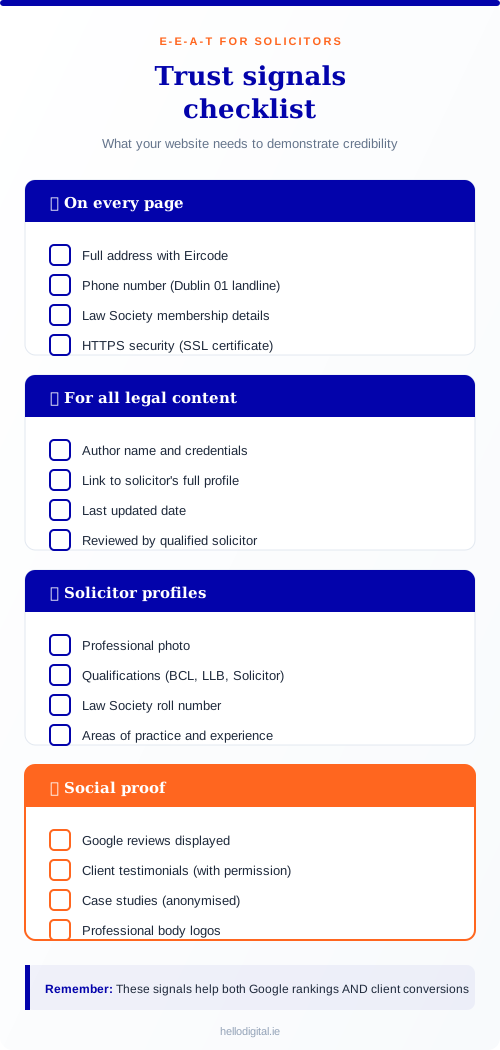
Here's how to apply E-E-A-T principles to your website.
Review existing pages with these questions:
Who wrote this content? Is it attributed to a qualified solicitor?
Does it reflect genuine experience or just generic information?
Is it accurate and up to date?
Does it provide real value or is it thin content?
Prioritise updating or removing content that fails these tests.
For each solicitor who contributes content:
Photo
Law Society number
Areas of practice
Link to content they've authored
Ensure every blog post and guide links to its author.
Check that your website displays:
Full contact details on every page
Law Society membership information
HTTPS security
Privacy policy and GDPR compliance
Professional indemnity insurance confirmation
Clear information about your firm
For key practice area pages:
Expand thin content into comprehensive guides
Add practical insights from your solicitors
Include FAQs based on real client questions
Update annually or when legislation changes
Ongoing activities to build authority:
Seek opportunities for media commentary
Contribute to legal publications
Participate in professional bodies
Create content worth linking to
Encourage satisfied clients to leave reviews
If you'd like help implementing E-E-A-T improvements, see our SEO services.
"Written by Admin" or no author at all undermines expertise signals. Every piece of legal content needs clear attribution to a qualified person.
Legal content from 2018 discussing pre-Covid employment law damages your credibility. Review and update content regularly, especially after legislative changes.
Service pages that say little more than "We handle conveyancing. Contact us for more information" provide no value and demonstrate no expertise.
If visitors can't verify that your solicitors are actually qualified, trust suffers. Display Law Society membership clearly.
A firm with no Google reviews in 2026 looks suspicious. Actively build your review profile.
No HTTPS, broken pages, or outdated design all undermine trust. Your website should look and function professionally.
Inconsistent information across directories, an abandoned Google Business Profile, or no presence in legal directories weakens authority signals.
Not exactly. E-E-A-T itself isn't a score in Google's algorithm. However, Google's algorithms are designed to identify and reward content that demonstrates E-E-A-T qualities. Think of it as a framework for understanding what Google's algorithms try to measure, rather than a direct input.
Changes can take weeks or months to influence rankings. E-E-A-T is assessed across your entire site and online presence, not page by page. Consistent improvement over time yields results.
Content should be written by someone with genuine expertise or, at minimum, reviewed and approved by a qualified solicitor. Marketing teams can draft content, but a practising solicitor should verify accuracy and add expert perspective.
For YMYL content like legal advice, author profiles are important. They allow Google to associate content with qualified individuals and allow users to verify expertise. Anonymous legal content is at a disadvantage.
Yes. E-E-A-T is about demonstrating genuine expertise and trustworthiness, not size. A small firm with deep expertise in a niche area, clear credentials, and quality content can outperform larger firms with generic websites.
Indirectly. Reviews, accurate information, and engagement on your GBP all contribute to trustworthiness. Your GBP is part of your overall online presence that Google evaluates.
Only if that solicitor actually wrote or reviewed it. Don't falsely attribute content. If old content wasn't written by a qualified person, consider having a solicitor review and update it, then attribute it honestly.
AI-generated content isn't automatically penalised, but it must still demonstrate E-E-A-T. For legal content, this means AI drafts should be reviewed, verified, and enhanced by qualified solicitors. The expertise and experience of a human practitioner needs to be evident.
Experience
Content references real practice experience
Case studies included (anonymised appropriately)
Practical insights that reflect actual work
Solicitors quoted or contributing directly
Expertise
Author profiles with full credentials
Law Society membership numbers displayed
Content attributed to qualified solicitors
Specialist accreditations mentioned
Content depth reflects genuine knowledge
Authoritativeness
Listed in Law Society directory
Profiles on legal directories
Media mentions or publications
Links from reputable sources
Consistent NAP across all platforms
Trustworthiness
Full contact details on every page
HTTPS enabled
Privacy policy and GDPR compliance
Google reviews displayed or linked
Professional website design
Transparent fee information
E-E-A-T is one component of a comprehensive SEO strategy for solicitors. For the complete picture, including local SEO, technical optimisation, and content planning, see our comprehensive guide: SEO for Solicitors: The Complete Guide for Irish Law Firms.
Your Google Business Profile is also crucial for demonstrating trustworthiness — read our guide on Google Business Profile for Irish Solicitors.
If you'd like help improving your firm's E-E-A-T signals and online presence, get in touch for a free consultation.
Alessandro Boscolo Conway — Hello Digital
I'm a Dublin-based freelance SEO and digital marketing consultant with over 20 years of experience, including time on Google Ireland’s Search Quality team.
I run Hello Digital, a consultancy that helps startups and small businesses across Ireland grow online through clear strategy, expert delivery, and practical support.
I've worked with over 50 Irish companies to improve their visibility, generate better leads, and grow sustainably through SEO and digital marketing.
I'm a certified Google Partner and a trusted advisor to e-commerce brands, local services, and fast-growing startups.
- Based in Dublin, 20+ years of experience
- Former Googler, certified Google Partner, SEO strategist, and performance marketer
- Trusted by 50+ Irish startups, e-commerce brands, and local businesses
- Learn more about Hello Digital