


TL;DR: Want to become an SEO specialist?
-
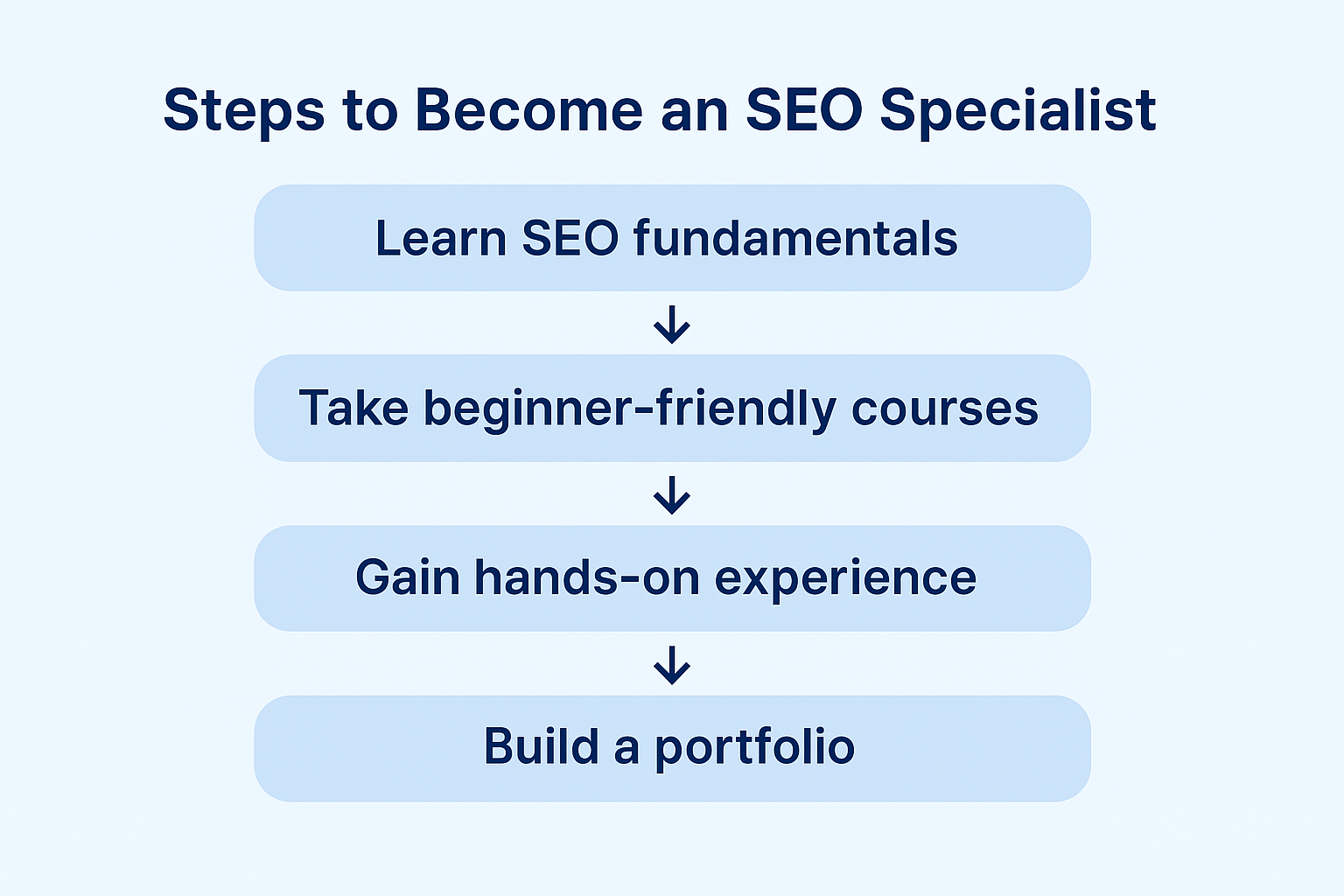
To become an SEO specialist, start by learning the fundamentals of how search engines work, then take beginner-friendly courses from platforms like Google or HubSpot.
-
Build hands-on experience by optimising your own site or helping others, and develop a portfolio that shows real results.
-
Certifications can add credibility, but practical skills matter most.
-
As you grow, focus on key areas like technical SEO, keyword research, content strategy, and analytics.
-
Stay current with industry trends, tools, and communities to keep your skills sharp and opportunities growing.
How to become an SEO specialist
Search engine optimisation (SEO) is one of the most in-demand digital skills today.
Whether you're a small business owner in Ireland trying to grow your online visibility, a student exploring a career in digital marketing, or a professional thinking about a career change, learning how to become an SEO specialist can open up valuable opportunities.
At its core, an SEO specialist helps websites rank higher on search engines like Google by making them easier to find and more useful to users.
This can involve anything from improving how fast a site loads to writing content that answers what people are searching for.
The demand for SEO expertise has grown steadily as more businesses compete for attention online.
Unlike paid advertising, SEO focuses on driving free, organic traffic, which makes it a practical and cost-effective long-term strategy for any website owner.
This guide will take you through the steps to become an SEO specialist, whether you want to do SEO for your own business, build a career in digital marketing, or start freelancing.
You'll learn the key skills, recommended certifications, and how to gain experience, with clear and practical tips at every stage.
Let’s start with a step-by-step overview of how to become an SEO specialist today.
Key takeaways
-
An SEO specialist helps websites rank higher on search engines like Google by improving on-page content, technical performance and authority.
-
Core skills include keyword research, analytics, content optimisation, technical SEO and link building.
-
If you are exploring how to become an SEO specialist, it helps to understand the earning potential.
-
In Ireland, entry-level SEO roles typically start around the mid-€20,000s and can rise to €35,000+, with experienced and senior specialists reaching €70,000–€85,000 or more.
-
Freelance SEO consultants and agencies often charge from €20 to over €100 per hour, depending on experience, niche and service scope.
-
You can build SEO skills through free and low-cost online courses, including platforms like Google Analytics Academy, Moz and HubSpot.
-
Recognised certificates in SEO, analytics and digital marketing can support job applications and help you stand out when you are new to the field.
-
Practical experience is essential.
-
Working on your own website, volunteering with small businesses or charities, taking on freelance projects or completing internships all help you learn how to apply SEO in real situations.
-
A portfolio that shows before-and-after results, rankings and traffic improvements will carry more weight than theory alone.
-
SEO and AI SEO change quickly.
-
To stay current, follow reputable blogs, podcasts, newsletters and YouTube channels that cover search updates, AI search, tools and case studies.
-
Taking part in online communities and local meetups can also help you build a network and hear about roles, freelance work and collaboration opportunities.
Step-by-step: How to become an SEO specialist
If you're new to SEO, it can seem overwhelming at first, but becoming an SEO specialist is very achievable with a structured approach.
Here’s a step-by-step guide to help you build your skills and confidence, whether you want to do SEO for your own business or work in the industry.
Step 1: Learn the basics of SEO
Start with the fundamentals.
Get familiar with how search engines like Google work and what SEO actually involves.
Key concepts include keywords, search intent, on-page optimisation (e.g. titles, headings, content), technical SEO (e.g. site speed, mobile-friendliness), and link building.
Plenty of free online resources are available.
Look for beginner-friendly guides from Google Search Central, Moz, or Ahrefs.
Step 2: Take free or paid SEO courses
Online courses are a great way to structure your learning.
Free options like Google’s SEO Starter Guide or HubSpot Academy’s SEO course can help build your foundation.
Paid courses can offer more depth and certification to show your knowledge.
Look for training that covers core areas such as keyword research, content optimisation, analytics, and SEO tools.
Step 3: Practise SEO on your own website
The best way to learn SEO is by doing it.
Set up a blog, portfolio site, or test project and apply what you're learning in real time.
Try optimising your pages for search, experiment with different keywords, and track how your traffic changes over time.
This hands-on experience is valuable whether you’re planning to apply for SEO jobs or promote your own business.
Tip:
Don’t wait until you’ve finished a course to start applying SEO.
Set up a simple blog or website early in your learning process.
You’ll understand concepts better by seeing how they work in the real world.
Step 4: Build an SEO portfolio with real results
If you’re aiming for a career in SEO, you’ll need to show what you can do.
Your portfolio should highlight specific outcomes, like increased traffic, better rankings, or improved site performance.
Use screenshots, data from tools like Google Analytics, and before-and-after comparisons to demonstrate your impact.
You can use your own website, volunteer projects, or freelance work to build this up.
Step 5: Get SEO-certified (optional but helpful)
While you don’t need a certificate to become an SEO specialist, it can help validate your skills, especially if you're applying for roles without formal experience.
Well-known certifications include the HubSpot SEO Certification and Google's Analytics and Search Console training.
Choose courses that are recognised in the industry and up to date with current best practices.
Step 6: Gain SEO experience through freelance or project work
Real-world experience builds confidence and credibility.
You might start by offering SEO help to a local business, volunteering for a charity, or finding freelance gigs online.
Each project helps you apply what you've learned, solve new problems, and strengthen your portfolio.
Even small wins, like improving page speed or ranking for a long-tail keyword, can be meaningful.
When I was starting out in SEO before joining Google Search Quality Team in Dublin, I didn’t have a formal job in the industry yet.
One of my first hands-on SEO projects was helping a friend who owned a local café.
I optimised their website by improving page speed, rewriting title tags, and adding relevant local keywords.
Within six weeks, their visibility in Google Maps had increased by 40%, and they saw a noticeable uptick in foot traffic.
That early success became a key part of my portfolio and helped me land my first SEO job.
Step 7: Stay up to date with SEO trends and tools
SEO is always changing, so ongoing learning is essential.
Follow industry blogs, newsletters, and podcasts.
Stay current with updates from Google and learn how to use tools like Google Search Console, SEMrush, or Screaming Frog.
Set aside time each week to read, test new tools, and explore what’s working for others in the field.
Step 8: Connect with others in the SEO community
Networking can lead to learning opportunities, mentorship, and job leads.
Join SEO forums, attend meetups (online or in person), and take part in discussions on platforms like LinkedIn, X, or Reddit.
Being active in the community helps you grow faster and stay motivated.
Plus, it’s a great way to hear about trends and real-world challenges.
Core SEO skills you’ll need
To become an effective SEO specialist, you’ll need a mix of technical knowledge, analytical thinking, and communication skills.
Whether you're working on your own website or managing SEO for clients or employers, these are the core abilities that will help you succeed.
Technical SEO
Understanding how websites work behind the scenes is key.
This includes making sure a site loads quickly, works well on mobile devices, has a clean URL structure, and is easy for search engines to crawl and index.
Familiarity with tools like Google Search Console and Screaming Frog can help you identify and fix technical issues.
On-page SEO
This is all about optimising the content and structure of individual pages.
You’ll need to know how to write effective title tags, meta descriptions, headers, and body content that align with search intent.
Internal linking, image optimisation, and clear formatting also play a role here.
Off-page SEO and link building
Building a site’s reputation involves more than just on-site work.
Off-page SEO is about earning high-quality backlinks from other trusted websites.
Outreach, guest posting, and content promotion are common tactics.
Understanding what makes a link valuable is important for building authority without breaking search engine guidelines.
Local SEO
If you're running or supporting a business that serves a specific area, like a restaurant, shop, or service provider, mastering local SEO basics is essential.
It helps your business show up in local search results and on Google Maps.
Key actions include:
-
Creating and verifying a Google Business Profile
-
Adding local keywords (e.g. “plumber in Limerick”)
-
Earning local backlinks from community websites or directories
-
Collecting positive customer reviews on Google
Local SEO tools like BrightLocal, Whitespark, or GBP Audit can help you monitor and improve local rankings.
E-commerce SEO
Optimising an online store involves unique challenges, like managing product pages, filters, and large inventories.
To get started with e-commerce SEO, focus on these areas:
-
Optimising product titles, descriptions, and images
-
Creating category-level content for SEO and user experience
-
Avoiding duplicate content with proper canonical tags
-
Improving site speed and mobile usability for shopping behaviour
-
Using structured data (schema) for rich product results in search
Popular platforms like Shopify, WooCommerce, and Magento each have different SEO limitations, understanding them is vital when optimising e-commerce sites.
Keyword research
Good SEO starts with knowing what people are searching for.
You’ll need to find relevant keywords that match your goals, assess their competitiveness, and understand user intent.
Tools like Google Keyword Planner, Ubersuggest, or Ahrefs can help you uncover keyword opportunities that drive traffic.
Content strategy
SEO and content go hand in hand.
You’ll need to plan and create content that is useful, relevant, and engaging, while also being optimised for search.
This might include blog posts, service pages, or guides like this one.
Knowing how to align content with different stages of the buyer journey is also useful.
Analytics and reporting
Tracking your SEO performance is essential for knowing what’s working.
You should be comfortable using tools like Google Analytics and Google Search Console to measure traffic, rankings, click-through rates, and more.
Being able to interpret this data helps you make informed decisions and report results clearly.
Tip:
The ability to interpret data is more valuable than just pulling reports.
Learn how to explain what the numbers mean and what actions should follow.
This is what sets you apart in SEO roles.
SEO tools and platforms
A strong grasp of popular SEO tools makes your work faster and more effective. Learn the basics of:
-
Google tools: Search Console, Analytics, Tag Manager
-
All-in-one platforms: SEMrush, Ahrefs, Moz
-
Crawlers and auditors: Screaming Frog, Sitebulb
-
CMS platforms: WordPress and Shopify are especially useful for hands-on SEO
Choosing your SEO tools: Semrush vs. Ahrefs vs. others
There’s no perfect SEO tool, but knowing the strengths of each helps you work smarter.
| Tool | Best For | Strengths |
|---|---|---|
| Semrush | Competitor research, PPC data | Detailed keyword and SERP analysis |
| Ahrefs | Backlink analysis, content SEO | User-friendly, strong link database |
| Screaming Frog | Technical site audits | Deep crawling, custom reports |
| Google Search Console | Performance tracking | Free, essential for site diagnostics |
Tip:
Start with free trials and get comfortable using each tool before investing long-term.
AI tools and automation in SEO
AI-powered tools are becoming a valuable part of every SEO toolkit.
While they don’t replace strategy or experience, they can significantly speed up workflows and improve insights.
Here’s how AI can support your SEO work:
-
Keyword research: Tools like ChatGPT or Frase can help generate seed keyword ideas and organise topics by intent
-
Content creation: AI writing assistants like Jasper or Surfer SEO can support blog outlines, meta descriptions, and even FAQs. Just make sure to fact-check and edit for quality
-
Technical audits: Some tools now flag SEO issues using AI-based prioritisation or anomaly detection
-
SEO automation: Platforms like SEOTesting, Keyword Insights, or Surfer automate content briefs, reporting, or clustering
Tip:
Use AI to enhance your work — not replace it.
Human oversight, critical thinking, and personalisation remain essential for quality and trust in SEO.
Soft skills that matter
While technical knowledge is important, so are soft skills.
Being organised, curious, and good at solving problems will help you stay on top of the constant changes in SEO.
Communication is also key, whether you're explaining strategy to clients or writing content that connects with your audience.
SEO certifications that add value
You don’t need formal qualifications to work in SEO, but earning a recognised certification can help you stand out, especially if you're new to the field or changing careers.
It shows you’ve taken the time to learn the fundamentals and gives potential clients or employers more confidence in your abilities.
Here’s how to approach SEO certification, and which ones are worth considering.
When an SEO certification is helpful
-
You’re applying for an entry-level job and want to demonstrate commitment
-
You’re a freelancer building trust with new clients
-
You want to deepen your skills with structured learning
-
You’re shifting into SEO from another career and need a clear starting point
A certificate won’t guarantee results, but it can be a useful part of your learning journey.
Free SEO certification options
Many respected organisations offer free courses and certificates in SEO and digital marketing.
These are a great way to build a solid foundation without spending money.
-
Google Digital Garage – Fundamentals of Digital Marketing
Covers SEO basics as part of a wider marketing overview. -
HubSpot Academy – SEO Certification
Focuses on keyword research, on-page SEO, and building topic clusters. -
Semrush Academy – SEO Toolkit Course
Includes practical tutorials on how to use Semrush for keyword research, audits, and link analysis.
Tip:
Don’t chase SEO certificates just to pad your CV.
Choose SEO courses that offer hands-on tasks and let you apply what you learn immediately.
Those are the ones that stick and show up in real-world experience.
Paid SEO courses worth considering
If you’re ready to go deeper or want more hands-on support, some paid options offer comprehensive training with industry-recognised certificates.
-
Yoast SEO for Beginners (Paid) – Ideal for WordPress users
-
The Blueprint Training (By Ryan Stewart) – For advanced users looking to systemise SEO
-
ClickMinded SEO Course – Focuses on results-driven SEO for businesses
Before paying for a course, check that it’s:
-
Up to date with current SEO best practices
-
Taught by experienced professionals
-
Includes practical examples or real-world case studies
What to look for in an SEO course
When choosing a certification or course, consider:
-
Does it cover both on-page and technical SEO?
-
Are tools and hands-on activities included?
-
Can you apply what you’ve learned to your own site or portfolio?
-
Is there a community or support network?
Ultimately, the best course is the one that helps you take action and build real skills, not just tick a box.
Building your SEO portfolio
If you want to offer SEO services or apply for SEO jobs, having a portfolio is one of the most effective ways to prove your skills.
It shows what you’ve worked on, the tools you’ve used, and most importantly, the results you’ve delivered.
Even if you’re just getting started, there are practical ways to build a portfolio that helps you stand out.
Why your SEO portfolio matters
SEO is a results-driven field.
Employers and clients want to see evidence that you can improve rankings, increase traffic, or fix technical issues, not just that you’ve taken a course.
A portfolio gives them confidence in your abilities and makes you more competitive.
What to include in your SEO portfolio
Focus on projects that clearly demonstrate your impact.
For each one, outline:
-
The problem: e.g. low traffic, slow site, poor rankings
-
What you did: specific actions like keyword research, technical fixes, or content optimisation
-
The tools you used: e.g. Google Analytics, Semrush, WordPress
-
The outcome: improved visibility, higher conversions, faster site speed—use screenshots or graphs where possible
You don’t need dozens of examples.
3–5 strong case studies are enough when you're starting out.
Tip:
Recruiters and clients often scan for results, not tasks.
Instead of listing what you did (“ran keyword research”), focus on outcomes (“increased organic traffic by 40% in 3 months by targeting long-tail keywords”).
How to get SEO portfolio experience
You don’t need a full-time job to build your SEO portfolio.
Here are ways to gain practical experience:
-
Optimise your own website or blog
-
Volunteer to help a local business or charity with their SEO
-
Find freelance gigs on platforms like Upwork or Fiverr
-
Take part in SEO challenges or internships offered by training providers
The key is to track your work and document your progress.
Even small wins, like improving page speed or ranking for a long-tail keyword, are valuable if you can explain what you did and why it mattered.
Showcasing your SEO projects
Create a simple website or portfolio page that presents your SEO projects clearly.
You can use:
-
WordPress
-
Carrd
-
Notion
-
A PDF case study deck
Make sure your portfolio is easy to read, well-structured, and highlights the skills employers or clients are looking for.
SEO career paths and earnings
SEO is a flexible and growing career field.
Whether you want to work for an agency, join an in-house team, or build your own freelance business, there are many ways to develop your skills and increase your earning potential over time.
Common career paths in SEO
There’s no single route into SEO, but most specialists follow a similar progression as their experience grows:
Junior SEO Executive / Assistant
You’ll typically focus on basic tasks like keyword research, reporting, and updating content.
SEO Specialist
With more experience, you’ll lead audits, develop strategies, and manage parts of a website’s optimisation.
Senior SEO / SEO Manager
At this level, you may manage a team, handle client relationships, and plan large-scale campaigns.
Head of SEO / Digital Marketing Lead
You’ll be responsible for setting the SEO strategy across brands or managing cross-channel digital teams.
Some SEO professionals also move into related areas like content strategy, PPC, analytics, or CRO (conversion rate optimisation).
SEO freelance and consulting options
Freelancing is a popular route in SEO. It gives you flexibility and control over your work, but also requires self-promotion, client management, and continuous learning.
You might offer:
-
One-off SEO audits
-
Ongoing SEO retainers
-
Content and keyword planning
-
Technical SEO clean-ups
Many SEO freelancers in Ireland start part-time while building experience and transition to full-time once they have a steady client base.
What it’s like to work in SEO: in-house, agency, or freelance
There are three common career settings in SEO, each with its own benefits and challenges:
In-house SEO
You focus on one brand and get to know it deeply.
You’ll often work cross-functionally with marketing, dev, and content teams.
Agency SEO
You’ll manage multiple clients and industries.
It’s fast-paced and offers variety, but can also be deadline-driven.
Freelance SEO
Offers flexibility and control.
You can choose clients, work remotely, and scale at your own pace, but you’ll also need to market yourself and manage projects independently.
Understanding these environments helps you choose a path that fits your working style and goals.
Typical SEO salary ranges in Ireland
Salaries vary depending on experience, location, and whether you're working in-house, agency-side, or freelance.
| Role | Salary Range |
|---|---|
| Entry-level / Junior SEO | €26,000 – €35,000 |
| Mid-level SEO Specialist | €35,000 – €48,000 |
| Senior SEO / Manager | €48,000 – €65,000+ |
| Head of SEO | €65,000 – €85,000+ |
| Freelance / Consultant | €20 – €100+ per hour |
Freelance SEO rates depend on your experience, results, and the types of services you offer.
Having a portfolio and client testimonials can help you command higher rates.
SEO tools and skills that support higher earnings
Investing time in learning advanced tools and staying current with best practices can significantly boost your value.
Employers and clients often look for experience with:
-
Google Analytics and Search Console
-
Semrush, Ahrefs, or Moz
-
Screaming Frog or Sitebulb
-
WordPress or Shopify
-
Reporting and dashboard tools like Looker Studio
A day in the life of an SEO specialist
Every day can look different, but here’s a typical breakdown for someone working in-house or freelance:
-
9:00am – Check rankings and traffic using Google Search Console or Semrush
-
10:00am – Review technical issues flagged by Screaming Frog or PageSpeed Insights
-
11:30am – Optimise blog content with fresh keywords or improved internal linking
-
1:00pm – Plan upcoming content based on keyword gaps
-
2:30pm – Respond to client/stakeholder questions and report on progress
-
4:00pm – Research Google updates and test new tools or tactics
Staying organised and balancing tasks across technical, content, and reporting work is key to long-term success in SEO.
Staying ahead in SEO
SEO is not a set-and-forget skill.
It’s constantly evolving.
Search engines update their algorithms regularly, new tools emerge, and user behaviour shifts.
Staying up to date is essential if you want to maintain results, stay competitive, and grow your skills over time.
Follow trusted SEO sources
Make it a habit to read or watch reliable SEO content.
A few reputable sources include:
-
Blogs:
-
Moz Blog
-
Google Search Central Blog
-
Ahrefs Blog
-
Search Engine Roundtable
-
-
Podcasts:
-
Experts on the Wire
-
The Recipe for SEO Success Show
-
SEO 101 Podcast
-
-
YouTube channels:
-
Ahrefs
-
SEMrush
-
Matt Diggity
-
Google Search Central
-
Set aside time weekly to review updates or learn a new tactic.
Many platforms also offer newsletters you can subscribe to for curated updates.
Use social media and communities
Platforms like X, LinkedIn, and Reddit have active SEO communities where professionals share tips, experiments, and insights.
You can follow industry experts, join SEO groups, and take part in discussions.
Helpful communities:
-
/r/SEO on Reddit
-
Women in Tech SEO (open to all levels)
-
#SEOchat on Twitter
-
Slack groups like Traffic Think Tank (paid) or Online Geniuses (free)
These spaces are also good for asking questions, sharing your progress, and finding inspiration.
Attend SEO events and webinars
SEO conferences, meetups, and webinars are great ways to learn from experts and connect with others in the industry.
Many offer free online options or recordings if you can’t attend live.
Events worth watching for:
-
BrightonSEO (UK-based, with virtual passes)
-
Learn Inbound (Ireland-based digital marketing event)
-
MozCon
-
SearchLove
You don’t need to attend everything, just one or two well-chosen events a year can make a big difference.
Keep experimenting
SEO isn’t just about reading.
It’s about testing.
Try out new techniques on your own site, monitor the impact of changes, and reflect on what works.
Real-world application is one of the best ways to learn and stay sharp.
FAQs about becoming an SEO specialist
These common questions can help clarify what’s involved in starting and growing as an SEO specialist, especially if you're new to digital marketing or looking to shift careers.
1. Do I need a degree to become an SEO specialist?
No. A degree can help if it’s in marketing, communications, or a related field, but it’s not essential.
Employers and clients care more about your practical SEO skills, portfolio, and ability to deliver results.
2. How long does it take to learn SEO?
You can learn the basics in a few weeks, but becoming confident takes longer.
With consistent learning and hands-on practice, most people can reach a professional level within 3–6 months.
It depends on how much time you dedicate and the complexity of the work you take on.
3. Can I become an SEO specialist without experience?
Yes, but you'll need to show initiative.
Start by practising on your own website, taking free courses, and building a portfolio.
Volunteering for small businesses or charities is a good way to gain experience when you're just starting out.
4. What tools do I need to get started with SEO?
At a minimum, you should learn how to use:
-
Google Search Console – to track indexing and search performance
-
Google Analytics – to understand your website traffic
-
Ubersuggest or Ahrefs – for keyword and competitor research
-
Screaming Frog (free version) – for technical audits
Many tools have free versions or trials that are perfect for beginners.
5. Is freelancing a good way to start an SEO career?
Yes, especially if you want flexibility or to build experience.
Freelancing lets you work on real-world projects while growing your skills.
Start with smaller jobs and focus on delivering results.
Positive testimonials and a strong portfolio will help you attract more work.
6. How do you become a SEO specialist?
Start by learning how search engines work, then take beginner-friendly SEO courses to build your skills.
Practise by optimising your own website or helping others, and create a portfolio that shows clear results.
You don’t need a degree.
What matters most is hands-on experience and understanding core areas like keyword research, content strategy, and technical SEO.
7. Is SEO a well paid job?
Yes, SEO can be a well-paid career, especially as you gain experience.
In Ireland, entry-level roles typically start around €26,000–€35,000, with senior roles reaching €65,000–€85,000+.
Freelancers and consultants may earn €20–€100+ per hour depending on their track record and niche.
What is the 80/20 rule for SEO?
The 80/20 rule in SEO suggests that 80% of your results often come from 20% of your efforts.
In practice, this might mean that a small number of high-impact actions, like targeting the right keywords or fixing technical issues, can drive most of your traffic gains.
It’s a reminder to focus on what works best, rather than spreading your efforts too thin.
What qualifications do you need for SEO?
There are no formal qualifications required to work in SEO.
Most employers and clients look for practical experience, a solid understanding of SEO principles, and the ability to show real results.
That said, certifications from platforms like Google, HubSpot, or Semrush can boost your credibility, especially when you're starting out.