


TL;DR
-
Black hat SEO uses unethical tactics like keyword stuffing, cloaking, and fake backlinks to game search engine rankings.
-
These methods break Google and Bing guidelines and can lead to ranking drops, traffic loss, or even complete removal from search results.
-
For Irish SMEs, this means losing local visibility, damaging brand trust, and facing long recovery times.
-
Ethical white hat SEO focused on quality content, usability, and compliance is safer and better for long-term growth.
-
Search engines now use AI to detect manipulative tactics, especially in local markets like Ireland.
-
Stick with ethical SEO strategies to protect your reputation, attract loyal customers, and stay visible online.
What Irish businesses need to know about black hat SEO
Many small business owners want to grow their online visibility, but some are tempted by shortcuts that promise fast results.
This has led to increased interest in tactics that go against search engine rules, known as black hat SEO.
In this article, you’ll learn what black hat SEO is, how it works, why it’s risky, and what ethical alternatives you can use instead.
Understanding the differences between ethical and unethical SEO techniques helps you protect your website, maintain your brand’s reputation, and succeed in search results over the long term.
What is black hat SEO?
Black hat SEO refers to tactics that attempt to trick search engines into ranking a website higher than it deserves by breaking official guidelines.
These methods prioritise short-term visibility over long-term value, often at the expense of user experience and trust.
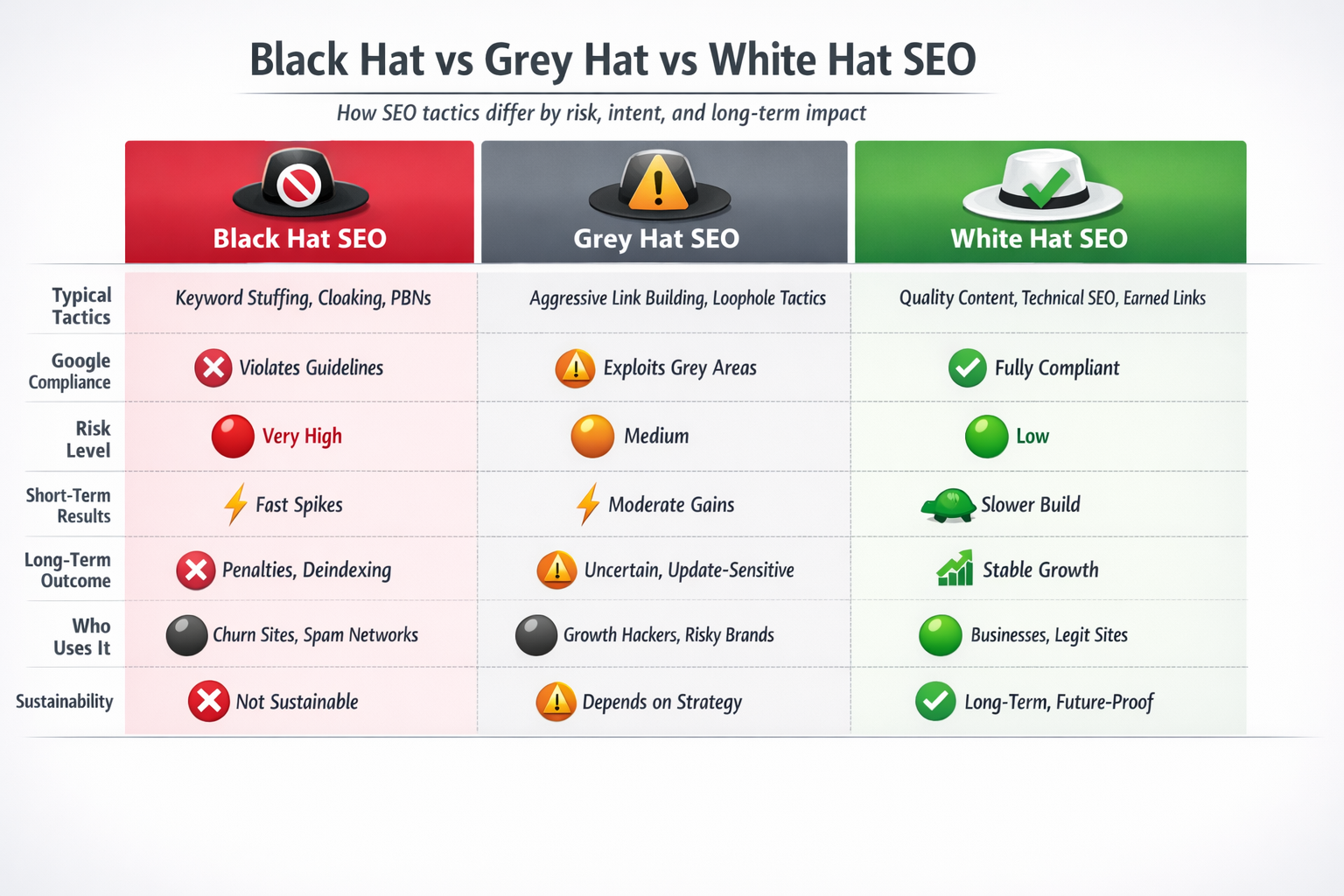
Unlike ethical SEO (known as white hat SEO), which focuses on creating high-quality content that benefits users, black hat SEO uses shortcuts like keyword stuffing, cloaking, and link manipulation.
These actions can lead to severe penalties, such as reduced rankings or complete removal from search engine results.
In simple terms: Black hat SEO is about cheating the system — and it usually backfires.
Black hat vs white hat vs grey hat SEO
To better understand how black hat SEO compares with other approaches, here’s a side-by-side breakdown of the key differences:| Feature / Tactic | Black Hat SEO | Grey Hat SEO | White Hat SEO |
|---|---|---|---|
| Compliance with guidelines | Breaks search engine rules | Operates in unclear/grey areas | Fully follows official guidelines |
| Risk of penalties | High – can lead to bans or deindexing | Medium – may be penalised over time | Low – safe from search engine actions |
| Common tactics | Cloaking, link farming, keyword stuffing | Expired domains, aggressive outreach, automation | Content optimisation, internal linking |
| Longevity of results | Short-term gains, long-term damage | Uncertain, depends on tactic longevity | Long-term, stable traffic growth |
| User experience focus | Ignored | Often secondary | Central to the strategy |
| Reputation impact | Can damage brand trust | Mixed, not always transparent | Builds brand credibility |
How black hat SEO tricks search engines
Black hat SEO relies on tactics that exploit weaknesses in search engine algorithms.
These methods are designed to boost rankings quickly without providing real value to users — something that both Google and Bing have systems in place to detect and penalise.
Common black hat SEO techniques include:
-
Keyword stuffing: Repeating the same search terms unnaturally within content, meta tags or footers, often to appear more relevant to search engines.
-
Cloaking: Showing different content to search engines than what users in Ireland see, often hiding spammy or irrelevant material behind a page that looks legitimate.
-
Link farming: Creating or buying large volumes of low-quality backlinks from unrelated websites to manipulate perceived authority.
-
Hidden text and links: Using white or invisible text on the page to include spammy keywords or links that users never see but bots can read.
These manipulative tactics may deliver short-term gains, but modern search engines are increasingly powered by AI that can detect these patterns, especially when content is localised or geo-targeted, like for Irish audiences.
Why black hat SEO violates guidelines
Black hat SEO techniques break the official rules set by major search engines like Google and Bing.
These rules, including Google’s Search Essentials, are designed to ensure that users find helpful, trustworthy, and relevant content in search results.
When businesses in Ireland use manipulative tactics like cloaking or keyword stuffing, they’re violating policies that protect the quality of search.
Search engines consider these actions deceptive because they:
-
Mislead both users and search crawlers.
-
Prioritise rankings over relevance and value.
-
Undermine fair competition among legitimate websites.
AI-driven search systems are now more capable of detecting these violations, even in local contexts like Ireland, making it increasingly risky for Irish SMEs to try to game the system.
Important: Violating SEO guidelines not only leads to ranking drops but can also damage your online reputation among Irish users and customers.
Risks of using black hat SEO
For small businesses in Ireland, black hat SEO can seem like a shortcut to visibility, but it often results in long-term harm.
Expert insight: “If you're using black hat SEO, you're going to have a bad time eventually. Search engines catch up.” — John Mueller, Google
Search engines like Google have advanced spam detection systems that use AI to identify manipulative tactics, and once a site is flagged, the consequences can be severe.
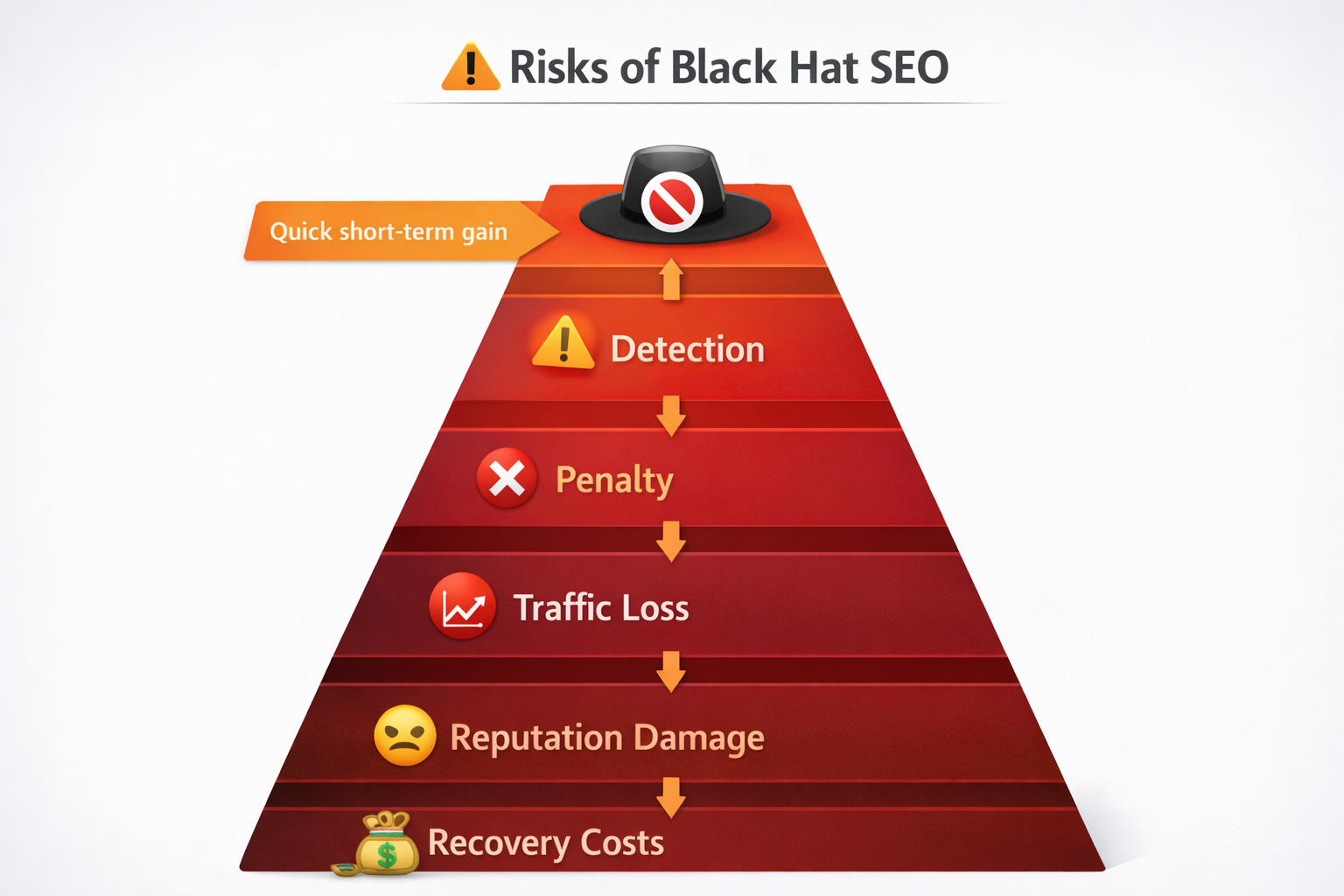
Here are the main risks of using black hat SEO techniques:
-
Loss of rankings: If your site violates guidelines, it can drop dramatically in search results or disappear entirely.
-
Decreased web traffic: Lower rankings mean fewer visitors, leading to fewer leads, sales, and reduced visibility in Ireland’s competitive online market.
-
Reputation damage: Irish consumers value trust. If your business is seen using shady practices, you risk losing credibility and customer loyalty.
-
Permanent delisting: In extreme cases, search engines may completely remove a site from their index, especially if it repeatedly breaks the rules.
Important: Even if black hat SEO tactics work temporarily, the damage to your site’s visibility and your brand’s reputation can last for years, especially in local search where competition is high.
Real-world examples of black hat SEO in Ireland
Even in Ireland, small businesses can fall into the trap of using risky SEO tactics, often unknowingly.
Here are some anonymised case studies that show what can go wrong:
Hotel in Dublin hit with manual action
A boutique hotel owner in Dublin hired a low-cost overseas SEO provider promising “page one in two weeks”.
The agency built hundreds of spammy backlinks through unrelated blogs and forums.
Within a month, the site received a Google manual penalty, and traffic dropped by 80%.
It took six months and a full disavow process to recover.
Tradesperson site removed from search
A local tradesperson in Cork used a free SEO plugin that auto-generated hidden text filled with keywords.
Google eventually detected the cloaking and removed the site entirely from its index.
They had to rebuild their website, losing months of leads in the process.
Irish e-commerce brand saw short-term lift, then vanished
An Irish online retailer bought a “traffic boost package” from a black hat marketplace, which used bots to inflate site visits and engagement.
While rankings improved briefly, Google’s AI system flagged the behaviour as unnatural, resulting in a ranking collapse during the next algorithm update.
Black hat SEO in practice: key stakeholders
Black hat SEO isn’t just a set of tactics; it’s a practice supported by a network of sellers, marketplaces, and buyers, many of whom operate in grey or illegal digital spaces.
Small business owners in Ireland may come across these services online, often marketed as “quick SEO wins” or “guaranteed ranking boosts”.
Understanding who’s behind black hat SEO can help Irish businesses avoid risky partnerships.
Online black hat SEO marketplaces
These platforms sell SEO services that openly break search engine rules.
Common offerings include:
-
Bulk backlink packages from spammy or irrelevant sites
-
Auto-generated content loaded with keywords
-
PBN (Private Blog Network) links to artificially boost domain authority
These services are often priced low to appeal to small businesses with limited marketing budgets, including local businesses across Ireland.
The consequences of using them can far outweigh the short-term gains.
Sellers and buyers
-
Sellers: Often anonymous or overseas, these vendors rely on volume and automation. They promote “ranking hacks” with little regard for long-term impact.
-
Buyers: Typically businesses desperate for quick visibility, unaware of the risks. Some Irish SMEs, particularly newer ones, may be lured by these promises, especially if they lack SEO knowledge or agency support.
Important: Buying SEO services from black hat providers, even unknowingly, can get your website penalised, regardless of your intent.
The impact on business and brand
Using black hat SEO can have serious and lasting effects on both your business performance and your brand’s credibility, particularly in a local market like Ireland, where reputation and trust often influence purchasing decisions.
Decreased visibility and traffic
If your website is penalised, it may drop sharply in Google or Bing rankings.
In some cases, it might be de-indexed completely.
This means fewer people will find your business when searching for local products or services online, leading to fewer leads and lost revenue.
Loss of customer trust
Irish consumers increasingly expect transparency from the businesses they support.
If they discover you’ve used deceptive marketing tactics or your site displays spammy content, it can damage your image and lead to:
-
Negative reviews on Google or Trustpilot
-
Reduced word-of-mouth referrals
-
Hesitation from local partners or clients
Long-term recovery costs
Even after removing black hat SEO practices, recovery can take months or years.
Irish businesses often have to:
-
Hire SEO professionals to undo the damage
-
Submit reconsideration requests to Google
-
Rebuild their online authority from scratch
This not only costs money but diverts attention from growing your business.
Important: A damaged reputation is harder to fix than a slow ranking —and in a competitive local market, trust is everything.
Why you should avoid black hat SEO
Black hat SEO may seem like a quick fix, especially for new or struggling businesses in Ireland, but the risks far outweigh the rewards.
Search engines are becoming increasingly effective at spotting deceptive SEO tactics, and penalties are harder to recover from than ever before.
Choosing ethical SEO practices is not just safer; it's better for building trust, attracting customers, and sustaining growth in the Irish market.
Ethical concerns
Black hat SEO involves dishonest practices, such as hiding content from users or faking relevance through spammy backlinks.
These tactics violate principles of transparency and fairness.
Irish consumers often rely on search engines to find credible local businesses.
If your site is associated with shady tactics, it reflects poorly on your integrity, even if you weren't directly involved in the work.
Penalties from search engines
Google and Bing enforce their webmaster guidelines strictly.
If your website is found using black hat SEO techniques, you may:
-
Lose rankings for important search terms
-
Receive a manual action from Google
-
Be removed from search results entirely
Such penalties can be particularly damaging for businesses that rely on local search traffic to drive enquiries and sales in Ireland.
Damage to your brand's reputation
Even if your content appears online, users are less likely to trust a business that’s connected with unethical SEO practices.
For Irish SMEs that depend on local trust and referrals, the brand damage can be far worse than a ranking drop.
Important: Once trust is lost, regaining it takes far more effort than ranking ethically in the first place, especially in a small market like Ireland.
Timeline of Google updates targeting black hat SEO
Google has consistently updated its algorithms to detect and penalise manipulative SEO tactics.
Here’s a snapshot of the key updates that affect black hat SEO practices:
| Year | Update Name | What It Targeted | Impact on Black Hat SEO |
|---|---|---|---|
| 2011 | Panda | Low-quality, thin content | Penalised content farms and keyword stuffing |
| 2012 | Penguin | Spammy link practices | Devalued link schemes and link farms |
| 2014 | PBN Crackdowns | Private Blog Networks | Mass deindexing of PBNs used for backlinks |
| 2016 | Penguin 4.0 | Real-time spam link filtering | Made link spam detection continuous |
| 2019 | March Core Update | Relevance and trust signals | Downgraded manipulative or over-optimised sites |
| 2022 | Spam Update | AI-based spam detection improvements | Targeted cloaking, fake redirects, auto-generated content |
| 2023 | Helpful Content | Promoted people-first content | Penalised SEO-written, low-value pages |
| 2024 | SpamBrain Enhancements | AI-based detection of link spam and cloaking | Increased enforcement precision, faster penalties |
Important: These updates show that Google is continuously evolving to detect black hat SEO, often in real-time, and increasingly using AI.
Ethical SEO alternatives that work
Avoiding black hat SEO doesn’t mean sacrificing growth; it means building your website the right way.
White hat SEO techniques focus on long-term results through honest practices that align with search engine guidelines and put the users first.
For small business owners in Ireland, ethical SEO is the most reliable way to grow traffic, earn trust, and compete in local search results.
What is white hat SEO?
White hat SEO refers to strategies that help your website rank by offering value to users, not by tricking search engines.
These include:
-
Writing relevant, helpful content that answers customer questions
-
Earning backlinks from trusted Irish websites or industry publications
-
Optimising pages for mobile usability, speed, and accessibility
-
Using proper on-page SEO: clear title tags, meta descriptions, and headings
When you follow the rules set by Google and Bing, you reduce the risk of penalties and create a stronger foundation for visibility in both organic results and AI-generated answers.
Benefits of ethical SEO
-
Trust and credibility: Irish customers are more likely to engage with brands that offer transparent, helpful content.
-
Stable rankings: Ethical strategies are less likely to be affected by algorithm updates.
-
Local SEO advantages: Google prioritises businesses that use structured data, quality content, and local signals — all central to white hat SEO practices.
Important: The goal isn’t to trick algorithms; it’s to build a brand that both search engines and customers trust.
Staying updated with SEO best practices
Search engine algorithms evolve constantly, especially with the rise of AI-driven search features.
For Irish businesses, staying informed about these changes is critical to remain visible in both traditional search results and AI-generated answers like Google’s AI Overviews or Bing Copilot.
1. Follow official search engine sources
Keep an eye on updates directly from:
These platforms announce changes to SEO rules, new features, and spam policy enforcement.
2. Join trusted SEO communities
Connect with SEO professionals through:
-
Local Irish SEO forums and LinkedIn groups
-
Global communities like Reddit’s r/SEO or Moz Q&A
-
Industry newsletters such as SEOFOMO (founded by Aleyda Solis)
This gives you access to real-time advice from peers and experts.
3. Monitor your site performance
Use tools like:
-
Google Search Console to track how your site performs in organic search
-
Google Analytics to monitor user behaviour and traffic drops
-
Bing Webmaster Tools for performance insights on Bing
Watch for any sharp ranking changes or crawl errors that could signal a penalty or algorithm impact.
4. Test before deploying changes
When applying new SEO strategies or updates:
-
Trial them on lower-risk pages
-
Monitor impact before rolling them out sitewide
-
Document what changes were made and why
This reduces the chance of widespread mistakes.
Important: Stay informed to avoid outdated or risky tactics and build a resilient SEO strategy that adapts as search engines and search habits evolve.
AI-powered SEO shortcuts: What to avoid and how to protect your website
The rise of generative AI tools has created a flood of SEO software claiming to deliver “fast rankings” or “AI-optimised content” with minimal effort.
For Irish business owners, this can seem like a tempting solution, but not all AI-powered SEO is safe or sustainable.
The problem with AI-generated shortcuts
Some AI SEO tools promise to:
-
Generate dozens of articles in minutes
-
Create backlinks using automated outreach bots
-
Optimise for Google’s AI Overviews with “rank-ready” answers
While these may sound helpful, many fall into black hat territory:
-
They churn out low-quality, repetitive, or misleading content
-
Overuse of AI leads to thin pages lacking originality or value
-
Some tools fake click signals or user engagement, which violates Google’s spam policies
Search engines are actively targeting these behaviours.
Google’s SpamBrain and Helpful Content systems use AI to detect mass-produced or manipulative content, even when it’s technically “original”.
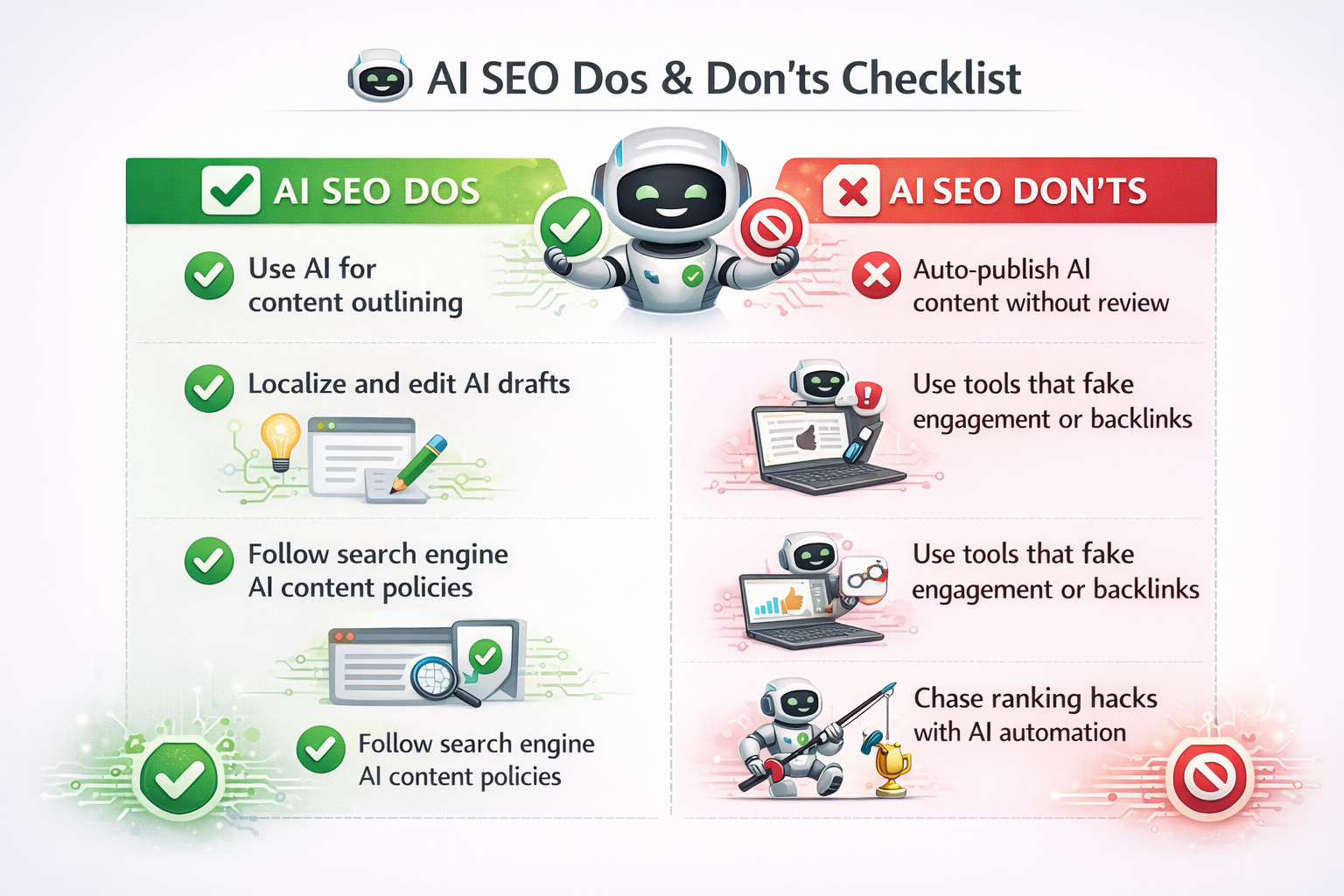
How to use AI safely in SEO
Not all AI tools are bad.
When used responsibly, they can help you:
-
Refine your writing, not replace it
-
Identify content gaps based on search intent
-
Speed up research for content planning
Stick to assistive use, not automated scale abuse.
How to protect your rankings and reputation
To stay safe in an AI-first SEO environment:
-
Review all AI-generated content manually — ensure it's accurate, helpful, and localised.
-
Avoid tools that promise ranking guarantees — especially those without transparency on how they work.
-
Check for duplication or hallucination — use tools like Copyscape or Originality.ai.
-
Stay aligned with official guidance — follow Google’s AI content guidelines and Bing’s webmaster recommendations.
Pro tip: AI can be your ally, but only if you remain in control. Irish businesses that focus on user-first content and adhere to search engine guidelines will be better positioned in AI-driven search results.
Why ethical SEO is the only strategy that lasts
Black hat SEO may offer fast gains, but it comes with serious long-term risks, including search engine penalties, lost traffic, and damaged trust.
For small business owners in Ireland, these consequences can be especially costly in competitive local markets.
The better path is through ethical SEO: creating helpful content, following guidelines, and building lasting credibility with both users and search engines.
By staying informed and investing in the right practices, you’ll grow your website’s visibility safely in the long term without the fear of penalties.
Important: In the end, search engines reward the same thing your customers do: trust, value, and transparency.
FAQs about black hat SEO
1. What is black hat SEO?
Black hat SEO refers to tactics that break search engine rules to boost website rankings quickly.
These include keyword stuffing, cloaking, and buying spammy backlinks — all of which can result in penalties from Google or Bing.
2. Why is black hat SEO risky for Irish businesses?
Using black hat SEO can lead to your site being penalised or removed from search results, reducing local visibility.
This can harm your online reputation and make it harder to attract customers.
3. What are examples of black hat SEO techniques?
Common techniques include:
-
Keyword stuffing
-
Hidden text or links
-
Cloaking
-
Link farming
-
Using private blog networks (PBNs)
These methods violate search engine guidelines.
4. Can black hat SEO still work in 2026?
Some black hat SEO tactics might still produce short-term gains, but AI-powered search engines are increasingly effective at detecting and penalising them.
Relying on black hat SEO in 2026 is a major risk for long-term visibility.
5. How can I tell if an SEO provider is using black hat methods?
Warning signs include:
-
Promises of “instant” rankings
-
Very low-cost packages with no strategy details
-
No mention of Google’s guidelines or best practices
Always ask for transparent tactics and local experience with Irish SEO.
6. What happens if Google penalises my website?
You may lose rankings or be removed from search entirely.
Recovery can take months, often requiring a full SEO audit, disavow of bad links, and a reconsideration request through Google Search Console.
7. Are there legal issues with black hat SEO?
While black hat SEO isn’t illegal under Irish or EU law, it may breach terms of service agreements and result in unfair commercial practices, which could raise issues under consumer protection rules such as the Unfair Commercial Practices Directive.
8. How does black hat SEO affect local search in Ireland?
If your business uses manipulative tactics, you may lose visibility in Google Maps and local search packs.
That means fewer phone calls, visits, and sales from nearby customers.
9. What are the alternatives to black hat SEO?
Use white hat SEO strategies like:
-
Creating helpful content
-
Earning quality backlinks
-
Optimising for mobile and speed
-
Following Google and Bing webmaster guidelines
These tactics support long-term visibility.
10. Where can I learn more about SEO best practices?
Start with:
-
Irish SEO blogs or local business networks
-
Newsletters like SEOFOMO for weekly industry updates